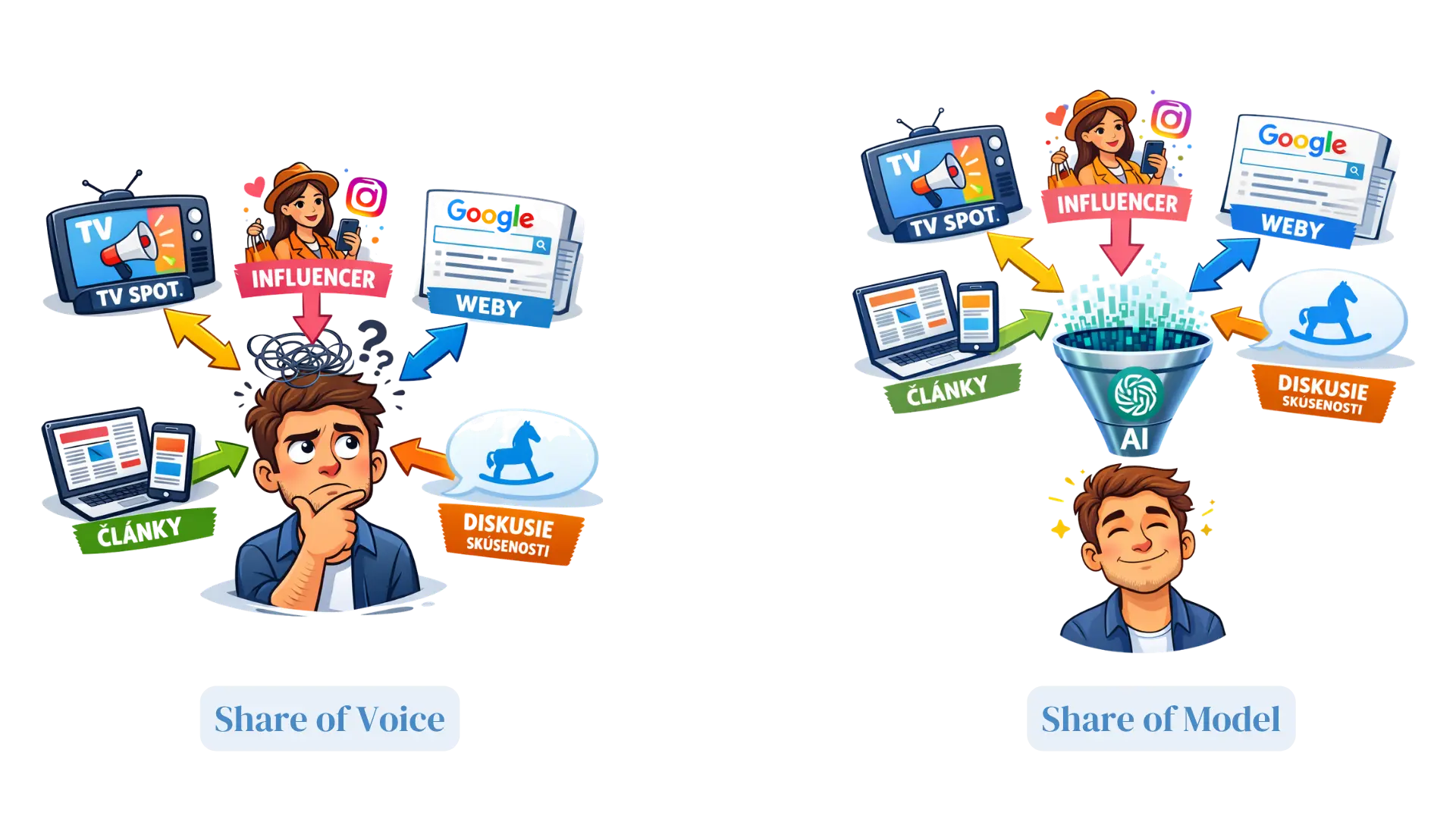
Why do campaigns aimed at Czech or Slovak mums often fail to work, fail to bring in customers and waste marketing budgets?
Where does the real problem lie, and what do companies often overlook? And how should you approach marketing so that it reflects how mums really make decisions today, across social media, communities, search engines and AI tools?
Pitfall 1: "Mums" are not a target group
This statement may sound surprising. Mums are often talked about as a target group, but in practice the label is too broad and imprecise.
The term "mums" covers a huge number of women with very different lifestyles, needs and behaviour. A woman on maternity leave with her first child makes decisions differently from a mother of two schoolchildren, and differently again from a woman who is just going back to work. They differ not only in age, but also in where they live, how they spend their time, which channels they use and whom they trust.
A simple rule applies:
If you talk to everyone, you reach no one.
That is why it is crucial to divide this broad group into specific subgroups, by life stage, values, behaviour or shopping habits. Then prepare a separate message, content and choice of channels for each of them.
Only then does marketing start to make sense.
Pitfall 2: Decisions are no longer made in one place
It used to be enough to be visible in a few media, and the brand had won. Today, decisions are made across the whole digital ecosystem.
Mums combine:
- social media (Instagram, TikTok)
- search engines (Google, Seznam)
- AI tools (for example ChatGPT, Gemini)
- discussion forums and communities
- reviews and other people's experiences
Each of these channels plays a different role. One inspires, another provides information, a third helps to confirm the decision.
What matters is that trust today is not built in advertising, but in the community and in real experiences.
That is why it is not enough to "be visible". You need to be present in the places where mums verify information and give each other advice.
Dividing the target group into subgroups helps you with this: It lets you know where specific women actually spend their time and what influences their decisions.

Pitfall 3: Attention is scarce, and advertising does not win it on its own
Today's users are saturated with advertising. It is not just the number of messages, but also the fact that people have learned to ignore them.
One-off campaigns or purely sales-driven messages are usually no longer enough.
Mums are also very sensitive to authenticity. They quickly recognise when a brand is only "selling" and when it genuinely brings value.
So a different approach works:
- long-term work on the brand
- useful and relevant content
- bringing in real experiences (reviews, testing, recommendations)
- a natural presence in the community
In other words: Do not interrupt, fit into their world.
Pitfall 4: Generation Z is changing the rules of the game

A new generation of mums is gradually coming onto the market. They grew up in a digital environment and have different expectations.
These women:
- actively search for information
- combine several sources (Google, AI, social media, communities)
- care more about a brand's values and credibility
- give great weight to recommendations from others
At the same time, they are less loyal to traditional brands and more open to new ones if they make sense to them.
This means that:
- it is not enough just to "be visible"
- you need to be trustworthy, relevant and authentic
This brings to the fore:
- a good customer experience
- work with the community
- transparent communication
- content based on reality, not on advertising promises
Mumarketing does not have to be scary
At first glance, marketing today can seem complicated. In reality, though, it offers a big opportunity.
Brands that understand how mums think and make decisions today gain a significant lead. Not because they have a bigger budget, but because they work more cleverly, with an emphasis on trust, relevance and a long-term relationship.
Instead of randomly testing channels and formats, you end up with a well-thought-out system that makes sense for the brand and its customers.
And that is exactly the difference between a campaign that just "runs" and marketing that really works.