From links to direct answers: the biggest change in digital marketing in 20 years
Digital marketing is going through its biggest turning point since the arrival of web search. Until now, a simple rule applied: Brands fought for the highest possible positions in search engine results. For many years, these were the main place where people looked for products, reviews and recommendations. If you were on the first page, you had a chance of getting a click, a visit and a customer.
Today, this model is changing: Users search less and less through a list of links and instead ask AI tools directly, for example ChatGPT, Google Gemini or Perplexity, or they use Google AI Overviews, which show a summary answer even before the classic Google results.
And this fundamentally changes the way purchase decisions are made. Customers increasingly do their first research through AI summaries, chatbots and zero-click answers, which help them get their bearings quickly, compare options and put together a shortlist of brands before they even visit a website. According to Eurostat, 32.7% of Europeans aged 16 to 74 used generative AI tools in 2025, and among young people aged 16 to 24 it was as many as 63.8%. This shows that AI is quickly becoming a natural part of online behaviour, and it increasingly plays a role in potential customers' purchasing process too.
Google also states that more than 2 billion users a month use Google AI Overviews. And this is the moment that decides everything: Will AI show your brand, or your competitor's?
If you do not appear in AI answers, then for a large share of customers it is as if you did not exist. Just as if you were not in Google search. That is why a new pillar of digital visibility is emerging today: GEO (Generative Engine Optimization).
GEO: when AI looks for trustworthy answers, not keywords
GEO is an approach that deals with a simple but fundamental question: which sources AI builds its answer from, and how your brand gets into it. Unlike classic SEO, where you optimise your own website for a search engine, GEO works with the whole digital environment in which your brand appears.
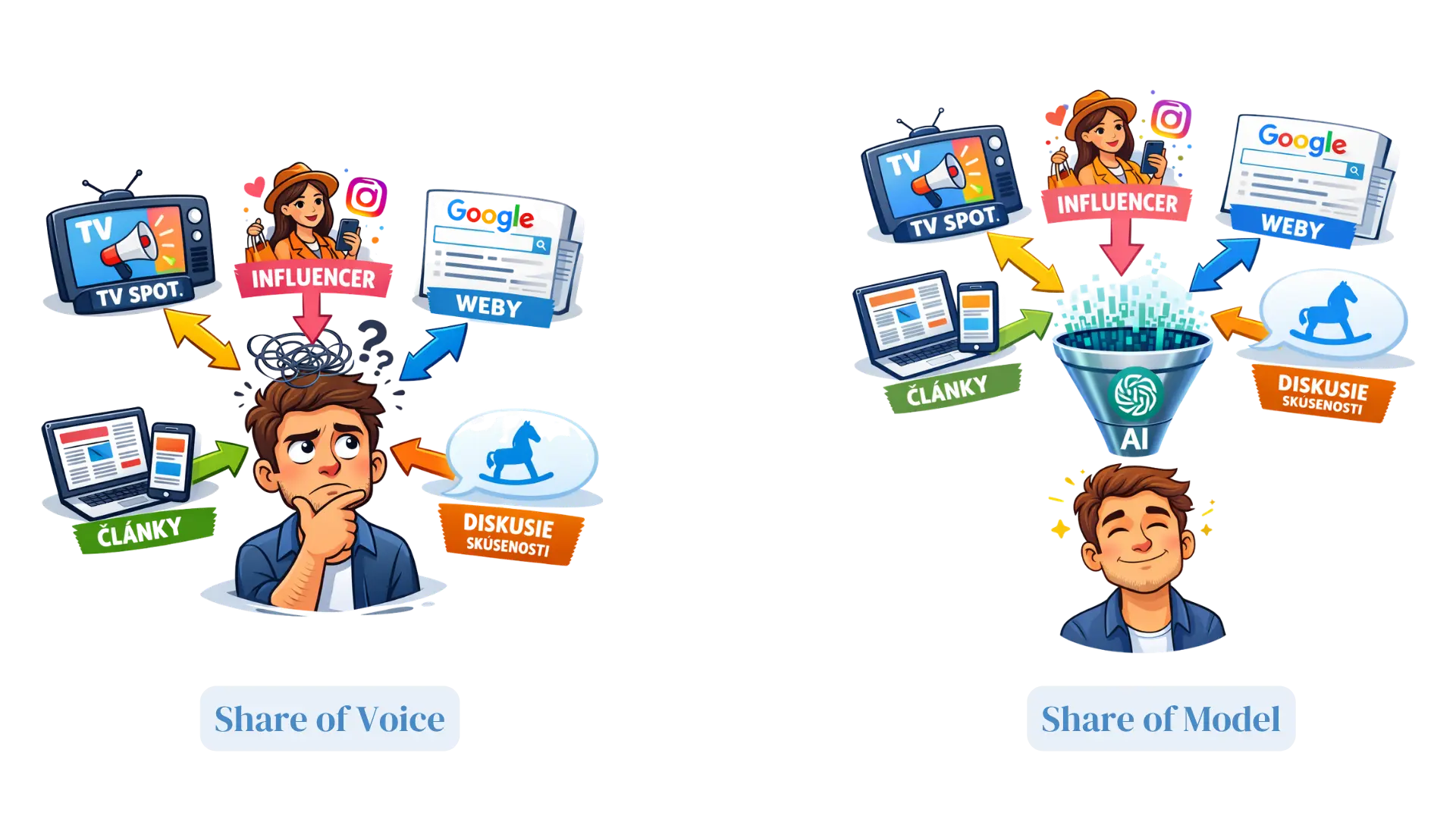
Generative AI tools such as ChatGPT, Google Gemini, Perplexity or Google AI Overviews do not draw information from a single website. They put the answer together from different types of sources, for example:
- content websites and articles,
- discussion forums and communities,
- product reviews,
- questions and answers,
- expert advice services and specialist portals.
Research led by a team from Princeton University shows that these systems do not choose "the best page". Instead, they combine several sources and try to understand what is most relevant and most trustworthy on a given topic. In other words, they do not just look for keywords; they assess the context, how often information is repeated and the overall picture of the topic that forms across the internet.
That is why these things matter to AI:
- where the brand is mentioned,
- how often it is mentioned,
- who mentions it,
- and what real people actually say about it.
And this is where the fundamental difference from SEO lies. Your website is just one source, and one where you talk about yourself. AI takes it into account, but it needs to "verify" the information elsewhere too. That is why it naturally trusts places where independent content is created more: discussions, reviews, experiences and recommendations between people.
The reason it works this way is fairly obvious: These sources meet the principle by which AI assesses the quality of information, known as E-E-A-T (Experience, Expertise, Authoritativeness, Trustworthiness). This means it checks whether content is based on real experience, whether there is expertise behind it, whether it comes from a trustworthy environment and whether it has been consistent over time. Discussions, reviews and expert advice services naturally contain these signals, while a company website on its own cannot cover them to the same extent. To put it another way, AI may consider the information on your website to be embellished, and because it wants to deliver the most relevant information possible, it double-checks it against independent sources.
This is exactly where what AI perceives as consensus and sentiment is formed, in other words whether a brand keeps appearing as a good choice, in which situations people recommend it and what reputation it has. In practice, GEO therefore means that a brand does not just optimise its website but builds its presence in the sources AI builds its answers from. The goal is not just to be "findable", but to become a natural part of the answer AI gives the user.
In other words: While SEO was about getting the search engine to show you, GEO is about getting AI to consider you a relevant solution.
Why your own website is not enough for GEO
As mentioned above, simply having a website is no longer enough for a brand to make it into AI answers. A company website is important for generative systems as a basic source of information. It helps them understand who you are, what you offer and which category you belong to. But that does not mean they will automatically recommend you.
AI does not take a single source as the truth. It puts answers together from several places and looks for agreement between them. If a brand appears only on its own website, AI can identify it but does not have enough evidence to include it among its recommendations. So it is not enough to "get it right on your own site". What matters is whether the same information also appears outside your own communication.
Sources the brand cannot directly control therefore carry more weight: discussions, reviews, questions and answers, or comparisons between users. This is where independent context is created, in other words the answer to whether the product works, who it has worked well for and in what situations people recommend it. And these are exactly the kinds of signals AI uses when deciding what to include in its answer.
If these signals are missing, the brand "exists", but it has no support in the data that would move it into the final selection. In practice, this means that without a presence in authentic, user-generated content, it is much harder for a brand to make it into AI answers, regardless of how good its own website is.
Modrý koník as your strategic GEO partner
Imagine a very specific situation: A user asks, "Which hand cream for dry hands is worth buying?" AI does not show them ads or your website. It gives them an answer along the lines of: "People often recommend X, Y and Z, because…"
The question is: How does AI know this?
It does not make it up. It takes it from places where questions like this are actually discussed: discussions, reviews and advice services. And Modrý koník is exactly that kind of place.
An infrastructure of trust
Modrý koník is not just a content website. It is an extensive database of real questions, answers, experiences and decisions created every day between users. This is crucial for AI, because it does not work with blatant advertising but with data that reflects reality. This is exactly the kind of environment it builds its answers from: from context, not from claims.
Expert advice: the highest level of authority
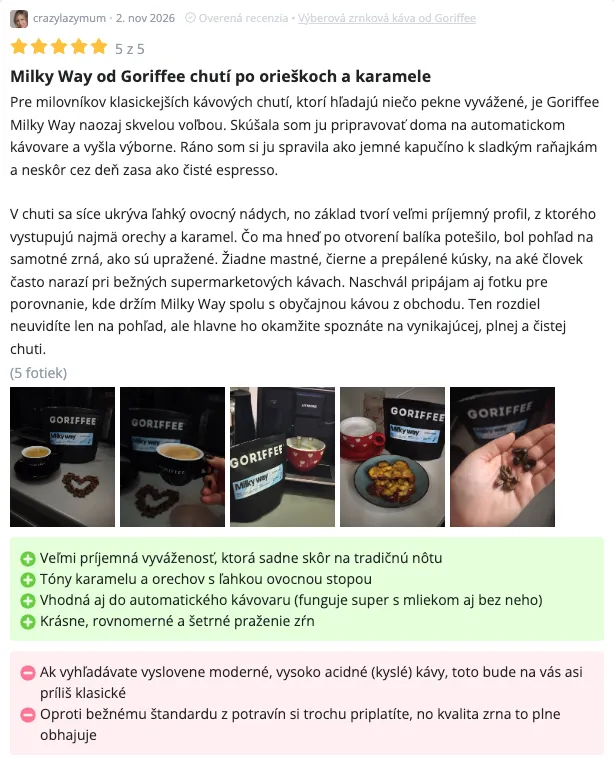
The advice services work on a principle that AI models naturally use: question and answer. A user deals with a specific problem and receives a specific solution. This format is ideal for AI, because it can "take it over" directly into its own answer.
Expertise is key, however. When a doctor, psychologist or specialist answers, the result is highly trustworthy content. If a brand appears in this context as the solution to a problem, it is one of the strongest signals possible for AI.
Review Centre: structured truth about products
AI does not just look for opinions, but for connections. Reviews on Modrý koník turn users' experiences into specific information: what worked, who the product is suitable for, in what situation it proved itself.
When, for example, it comes up repeatedly that a product is suitable for sensitive skin or practical for everyday use, AI starts to associate these properties with that specific product, which it then uses when putting its answer together.
Authentic discussions and sentiment
Discussions give AI something no brand website can: collective opinion. Not an individual claim, but a recurring pattern of behaviour and recommendations. If a brand consistently appears in discussions in a positive context over a long period, AI associates it with a specific category and situations. When asked something like "Which washing powder gets stains out well?", it then draws not on advertising but on this real consensus.
A GEO accelerator: connecting community and technology
Working with Modrý koník is not just about visibility. It is a process in which a brand systematically gets into the environment AI takes its answers from.
In other words: It is not just about being seen.
It is about AI remembering you as the answer.
Data that does not let go
The change in search is not a hypothesis but a trend backed by data. Gartner estimates that by the end of 2026, the volume of classic search could fall by as much as 25%, precisely because of the rise of AI chatbots and generative answers. This means only one thing: Some of the queries that today end with a click on a website will move directly into an answer with no need for a further visit.
At the same time, we can already see that AI is genuinely becoming the entry point to the purchasing process. According to Adobe Analytics, traffic to retail websites from generative AI tools grew by 1,200% in February 2025 compared with July 2024, and during the main shopping season this traffic grew by 1,300% year on year. This means AI no longer just informs people; it is already bringing customers directly to websites.
This trend is relevant to our market too. Today, 91.8% of Slovakia's population uses the internet, and around 43% of Slovaks already have experience with generative AI. In other words, it is a mass channel that is quickly becoming part of everyday decision-making.
At the same time, research led by a team from Princeton University shows that whether a brand makes it into an AI answer is no accident. Generative systems systematically select information from sources that are consistent, trustworthy and appear repeatedly in the same context. In other words, the sooner a brand starts building its presence in the environment AI draws on, the better its chance of becoming part of the answers.
This creates a new situation for companies: It is not just about reacting to the change, but about who takes advantage of it first. Brands that invest in GEO today and build their presence in community and trustworthy sources are gradually "taking their place" in AI answers. And just as with SEO in the past, those who arrive first will have a significant lead over the competition.
Your brand in the answers of the future
When a customer asks AI tools such as ChatGPT today, or sees a Google AI Overview, they get specific product recommendations, not a list of websites. And you can start influencing whether you or your competitor appears in those recommendations today.
Modrý koník is a shortcut to making sure AI learns about your brand from the right sources.
We help you get into the moments where decisions are made: when people ask, compare and recommend. These are the situations that decide things today.
Would you like to know more?
Find out how your brand can become a relevant part of the recommendations that decide purchases today, and whether its entity is properly anchored in the digital space. Get in touch and we will prepare a specific GEO plan for you.